Project Overview
El Paso Electric Company (EPE) is proposing the construction of a new 115 kV electric transmission line in El Paso County, Texas from Eastwind Substation to Rattlesnake Substation (the “Project”). The project would connect the Eastwind Substation (located east of I-10 on Eastwind Ave.) to the Rattlesnake Substation in southeastern El Paso County.
Regulatory Process
The regulatory process includes an Environmental Assessment and Routing Analysis, a Certificate of Convenience and Necessity (CCN) from the Public Utility Commission (PUC), and if required, an Administrative Hearing. View more details below.
1 Define Project
Identify beginning and end points for project.
2 Environmental Assessment & Routing Analysis
- Define study area
- Collect and review data
- Send consultation letter to local, state, and federal agencies and officials soliciting information on the study area.
- Map environmental and land use constraints in study area.
- Determine preliminary transmission line links based on maps, aerial photos, constraints data and field visits.
- Send invitation for open house to landowners in proximity to preliminary transmission line links.
- Current Phase: Hold open house to gather public input.
- Analyze preliminary transmission line links to develop the primary alternative routes.
- Prepare Environmental Assessment Report.
3 Public Utility Commission Application Process
- Submit an application to the Public Utility Commission (PUC) to amend the Certificate of Convenience and Necessity (CCN.)
- Upon filing of the application, notices will be sent to landowners whose properties may be crossed or owners of property which contain a habitable structure that is within 300 feet of any alternative route.
- Notices will also be sent to municipalities and electric utilities within five miles of the project and to municipal and county governments where the project is located.
- Following the filing of the application, interested parties will have an opportunity to participate in an intervention process.
If there are intervenors:
Administrative Hearing
- Conducts a technical review of project routing.
- Reviews testimony filed by all parties.
- Administrative law judge prepares proposed final order.
If there are NO intervenors:
PUC Staff Review
- PUC staff conducts a review and makes a recommendation to approve project as submitted or approve the project with modifications.
4 PUC Decision (within 6 months)
Option 1
- PUC approves the application.
Option 2
- PUC approves the application with modifications.
Option 3
- PUC denies the application.
Environmental and Land Use Factors for Evaluation
Numerous factors are considered during the development of a transmission line project. Explore those considerations below.
Land Use
- Length of alternative route
- Number of habitable structures1 within 310 feet of Right-of-Way (ROW) centerline
- Number of parcels crossed by alternative route
- Length of ROW using existing transmission line row
- Length of ROW parallel to existing transmission line ROW
- Length of ROW parallel to other compatible existing ROW (highways, public roadways, railways, etc. — excluding pipelines)
- Length of ROW parallel to apparent property lines
- Percentage of ROW parallel to existing compatible corridors and apparent property boundaries (excluding pipelines)
- Length of ROW through parks/recreational areas
- Number of parks/recreational areas crossed by ROW centerline
- Number of additional parks/recreational areas within 1,000 feet of ROW centerline
- Length of ROW through cropland
- Length of ROW through pasture/rangeland
- Length of ROW through land irrigated by traveling systems (rolling or pivot type)
- Number of transmission pipeline crossings
- Number of transmission line crossings
- Number of U.S. and state highway crossings
- Number of farm-to-market road crossings
- Number of cemeteries within 1,000 feet of the ROW centerline
- Number of Federal Aviation Administration (FAA) registered airports with at least one runway more than 3,200 feet in length located within 20,000 feet of the ROW centerline
- Number of FAA registered airports having no runway more than 3,200 feet in length located within 10,000 feet of the ROW centerline
- Number of private airstrips within 10,000 feet of the ROW centerline
- Number of heliports within 5,000 feet of the ROW centerline
- Number of commercial AM radio transmitters within 10,000 feet of the ROW centerline
- Number of FM radio transmitters, microwave towers, and other electronic installations within 2,000 feet of the ROW centerline
- Number of recorded water wells within 200 feet of the ROW centerline
- Number of recorded oil and gas wells within 200 feet of the ROW centerline
Aesthetics
- Estimated length of ROW within the foreground visual zone2 of U.S. and State Highways
- Estimated length of ROW within the foreground visual zone2 of Farm-to-Market roads
- Estimated length of ROW within the foreground visual zone2 of parks/recreational areas
Ecology
- Length of ROW through upland woodlands
- Length of ROW through bottomland/riparian woodlands
- Length of ROW across mapped National Wetland Inventory wetlands
- Length of ROW across known habitat of federally listed endangered or threatened species
- Length of ROW across open water (lakes, ponds)
- Number of stream crossings
- Length of ROW parallel (within 100 feet) to streams
- Length of ROW across 100-year floodplains
Cultural Resources
- Number of archeological or historical sites crossed by ROW
- Number of additional archeological or historical sites within 1,000 feet of ROW centerline
- Number of National Register of Historic Places listed properties crossed by ROW
- Number of additional National Register of Historic Places listed properties within 1,000 feet of ROW centerline
- Length of ROW across areas of high archeological site potential
1 Single-family and multi-family dwellings and related structures, mobile homes, apartment buildings, commercial structures, industrial structures, business structures, churches, hospitals, schools, or other structures normally inhabited by humans or intended to be inhabited by humans on a regular basis.
2 One-half mile, unobstructed.
Transmission Line Structure
A Double Circuit 115 kV Tangent Steel Monopole is being proposed for this project.
Click image to enlarge. Exact structure types, height and right-of-way requirements may vary. Typical tangent structures may include single circuit configuration.
Proposed Timeline
Project activities will occur between August 2025 and October 2028.

August 2025 - June 2026
Routing Study, Environmental Assessment, and Public Meeting

June 2026 - December 2026
File CCN/PUC Review
December 2026
PUC Approval
January 2027 - December 2027
ROW Activities
January 2028 - October 2028
Transmission Construction
Construction Timing/Methods
EPE plans to file the CCN application with the Public Utility Commission of Texas (PUCT) in June 2026. The PUCT has six months to make a decision on the project; however, the PUCT can issue an order prior to that time. The Company will begin construction upon final approval by the PUCT. EPE anticipates that the project will be completed by October 2028.

Surveying
Surveying of the proposed transmission line ROW is required to locate the centerline, the structure locations, obstacles above and below ground, and the edges of both new and existing ROW.
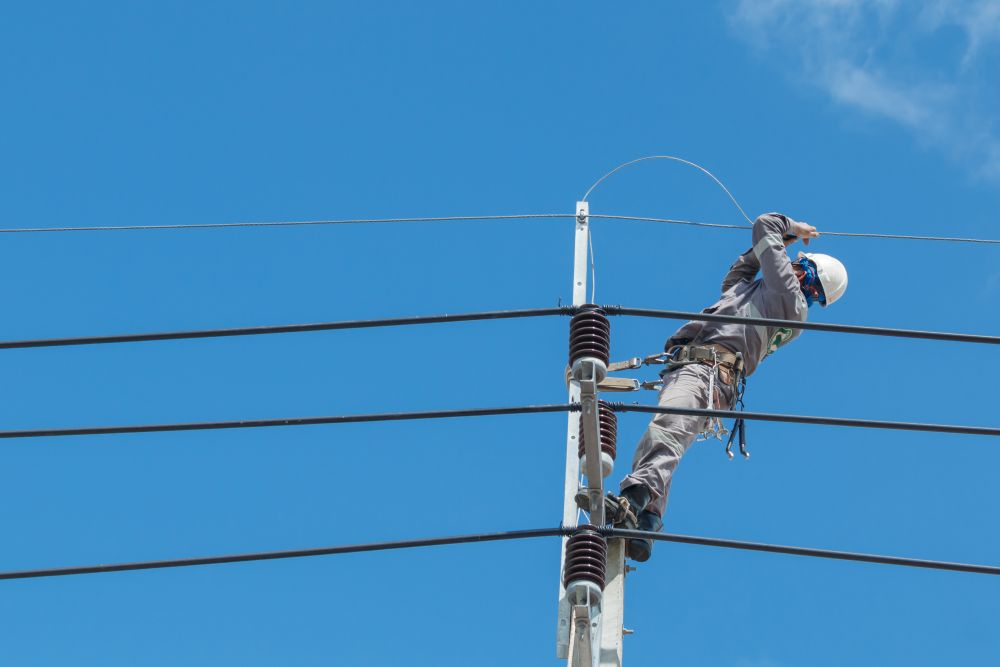
Conductor & Static Wire Installation
Once the structures have been erected, the stringing and clipping-in of conductors and static wires will begin. Outages on the rerouted transmission line are a possibility during the conductor and static wire installation. However, additional outages on other lines that will be crossed during the install are not anticipated. Each road crossing will have temporary guard poles installed for public protection while stringing in the new conductors.
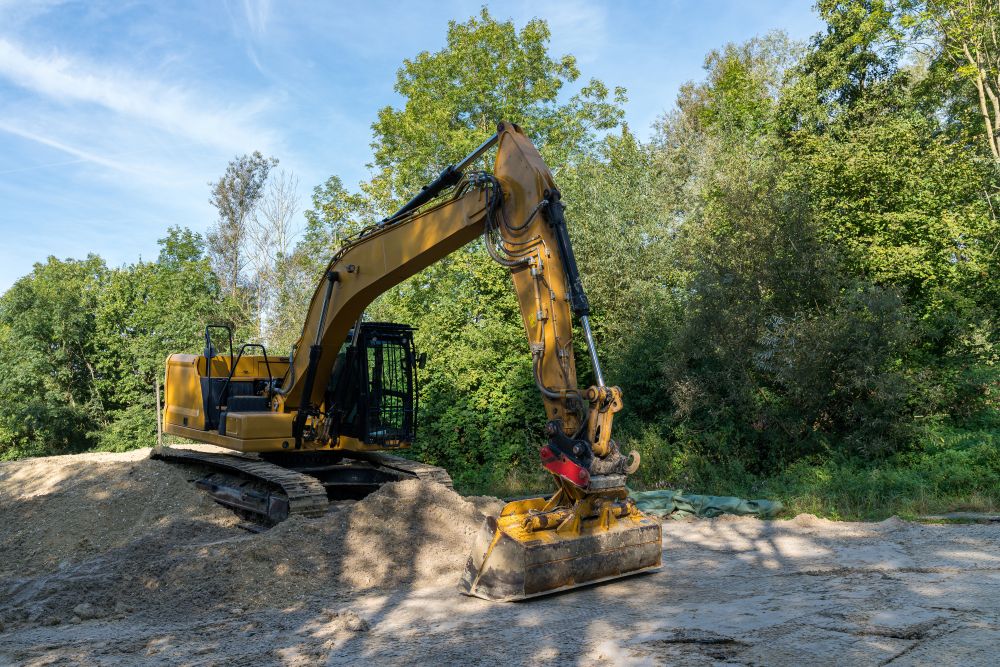
Clearing
Tree and shrub clearing may be needed in areas where new ROW is acquired. If a SWPPP is required, it will be implemented along the approved route prior to the start of clearing. Mechanized cutters and hand tools will be used to remove impeding vegetation to ground level.
Cleanup
Cleanup operations will be performed as construction activities are completed. Cleanup includes removal of debris, unused materials, and trash. Any necessary soil stabilization and reestablishing of vegetative cover will also occur during cleanup, following the procedures dictated in the SWPPP, if required. Pre-construction contours will also be restored following construction.
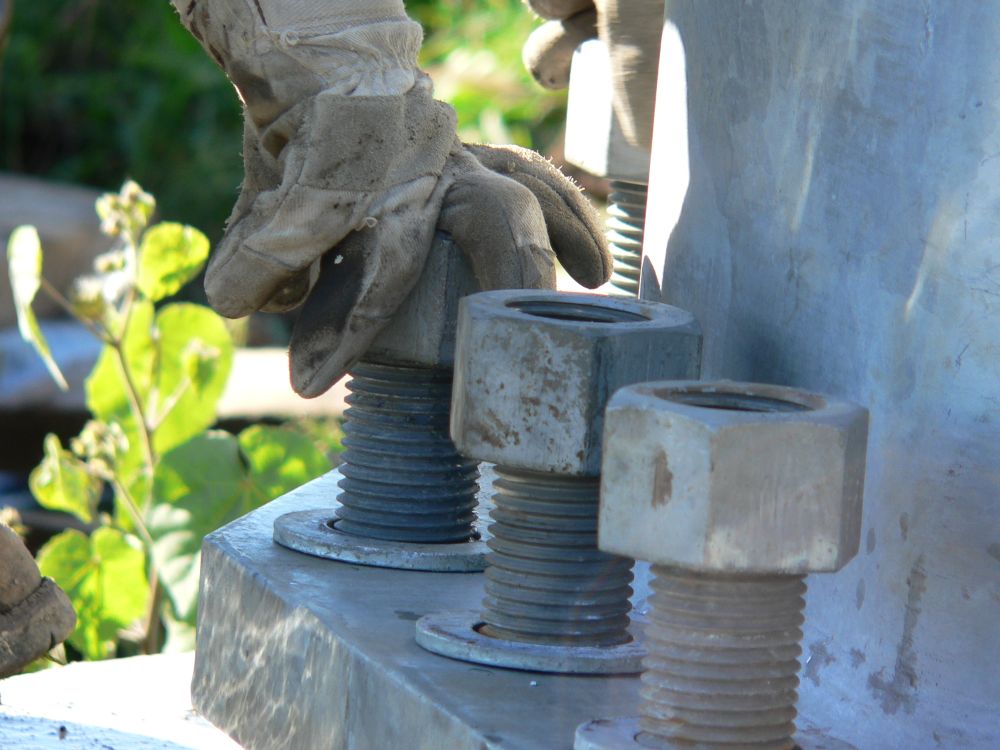
Structure Placement
Specialized wide-track vehicles and line trucks with trailers will be used to transport construction materials along the ROW to the structure locations.
Galvanized steel poles will be delivered to the site location shortly before the poles are ready to be set. A large crane would then set the pole directly into an excavated hole. The hole will be backfilled with native soil or crushed limestone.
If needed for the dead-end and angled structures, the concrete foundations will be installed several weeks before the steel poles are erected to allow the foundations to cure and reach their maximum strength. The steel poles will be delivered and set next to the proposed structure location shortly before structure erection. The structures will be assembled on-site, and a crane will be used to set the sections into place onto the previously installed foundations.

Governmental Agencies and Officials Contacted
Agencies and Officials
Federal Aviation Administration
Federal Emergency Management Agency
Natural Resources Conservation Service
U.S. Army Corps of Engineers
U.S. Department of Defense Military Aviation and Installation Assurance Siting Clearinghouse
U.S. Environmental Protection Agency
U.S. Fish and Wildlife Service
Texas Commission on Environmental Quality
Rio Grande Council of Governments
Texas Historical Commission
Texas Water Development Board
Texas General Land Office
Texas Parks and Wildlife Department
U.S. House of Representatives
U.S. Senate
Texas Senate
Texas House of Representatives
University Lands
Railroad Commission of Texas
El Paso Metropolitan Planning Organization
Texas Department of Transportation (TxDOT)
TxDOT El Paso District
TxDOT Division of Aviation
TxDOT Environmental Affairs Division
TxDOT Planning & Programming
City of El Paso
El Paso County
City of Socorro
Town of Horizon City
City of San Elizario
Ysleta del Sur Pueblo
Clint ISD
Tornillo ISD
El Paso County Historical Society
El Paso County Water Improvement District #1
Socorro ISD
Fabens ISD
Lower Valley Water District
El Paso Water
Horizon Regional MUD
El Paso International Airport
El Paso ISD
El Paso County Water Control & Improvement District #4
Fabens Airport
Questionnaire
Thank you for taking the time to learn about the Eastwind-Rattlesnake 115 kV Transmission Line Project. Please take a moment to complete the questionnaire below and submit your comments. Your insights and ideas help our project team develop the best solutions for system improvements. Please share your input by January 30, 2026.